목차
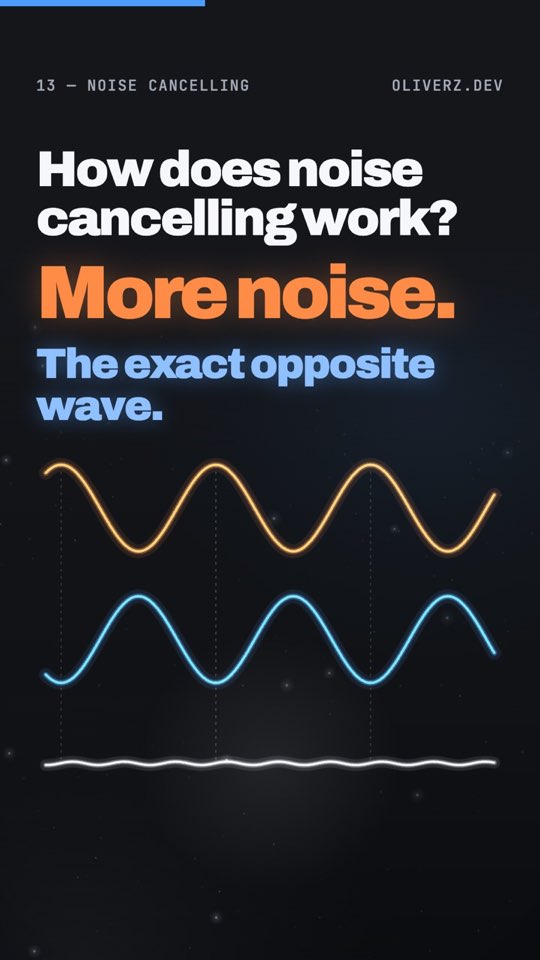
요약: 노이즈 캔슬링 헤드폰은 소음을 막는 게 아니라 소리를 더합니다. 소리는 압력이 높아졌다 낮아졌다 하는 파동입니다. 정반대의 파동, 즉 높은 곳에서 낮아지는 파동을 더하면 둘이 상쇄되어 거의 조용해집니다. 이어컵 바깥의 마이크가 다가오는 소음을 듣고, 칩이 그것을 위아래로 뒤집고, 스피커가 거울상 파동을 재생합니다. 이 모든 일이 소음 자체가 귀에 닿기 전의 수십 마이크로초 안에 끝나야 합니다. 안쪽의 두 번째 마이크는 남은 소리를 확인해 바로잡습니다. 이 경주 때문에 노이즈 캔슬링은 일정하고 낮은 웅웅거림에 가장 잘 듣고, 목소리나 갑작스러운 소리에는 훨씬 덜 들으며, 그런 소리는 이어 쿠션이 막아야 합니다.
소리로 소리를 상쇄한다
BBC Science Focus: "Noise-cancelling headphones cancel out unwanted sound by creating an opposing sound wave that mimics the noise you want to get rid of, but just 180° out of phase. This means that when one sound wave is at its highest peak, the other is at its lowest, effectively cancelling each other out. This is known as 'destructive interference'."(노이즈 캔슬링 헤드폰은 없애고 싶은 소음을 흉내 내되 위상만 180° 어긋난 반대 음파를 만들어 원치 않는 소리를 상쇄한다. 한 음파가 가장 높은 마루에 있을 때 다른 음파는 가장 낮은 골에 있어서 사실상 서로를 상쇄한다는 뜻이다. 이를 '상쇄 간섭'이라고 한다).
높은 압력이 낮은 압력을 만나면
The Physics Classroom: "Sound is a pressure wave that consists of compressions and rarefactions."(소리는 압축과 희박으로 이루어진 압력파다). 압축은 "a high-pressure region"(압력이 높은 영역), 희박은 "a low-pressure region"(압력이 낮은 영역)입니다. 둘이 정확히 맞물리면: "The tendency of the compression to push particles together is canceled by the tendency of the rarefactions to pull particles apart; the particles would remain at their rest position as though there wasn't even a disturbance passing through them."(입자를 한데 미는 압축의 경향이 입자를 떼어 놓는 희박의 경향에 상쇄된다. 입자는 마치 아무 교란도 지나가지 않은 것처럼 정지 위치에 머문다). 그래서 "two sound waves would combine to produce no sound."(두 음파가 합쳐져 소리가 나지 않는다).
듣고, 뒤집고, 재생한다
다시 The Physics Classroom: "Such earphones capture sound from the environment and use computer technology to produce a second sound wave that one-half cycle out of phase."(이런 이어폰은 주변의 소리를 받아들여, 컴퓨터 기술로 반 주기 어긋난 두 번째 음파를 만든다).
BBC Science Focus는 부품을 이렇게 설명합니다: "First, there is a microphone on the earcup to listen out for annoying external sound."(먼저 이어컵에는 성가신 외부 소리를 듣는 마이크가 있다). 그다음 "the 'out-of-phase' sound is created and then fed into the headphone speakers, along with the music you're playing."('역위상' 소리가 만들어져, 재생 중인 음악과 함께 헤드폰 스피커로 보내진다).
수십 마이크로초의 경주
IEEE Spectrum(2018): "having microphones located so close to the ears means commercial headphones get just tens of microseconds to process incoming sound, calculate an antinoise signal, and play it through their speakers before the sound reaches the ears."(마이크가 귀에 이렇게 가까이 있다는 것은, 시판 헤드폰이 소리가 귀에 닿기 전에 들어오는 소리를 처리하고, 반소음 신호를 계산하고, 스피커로 재생하는 데 겨우 수십 마이크로초밖에 없다는 뜻이다).
20°C 공기에서 소리의 속도는 "v = 343 m/s"입니다(The Physics Classroom). 설명을 위해 2cm로 잡으면, 소음이 이어컵을 가로지르는 데 약 58마이크로초가 걸립니다(직접 계산: 2cm ÷ 343m/s. 이어컵의 깊이를 밝힌 출처는 없습니다).
두 번째 마이크가 남은 소리를 확인한다
SoundGuys: "With feedforward technology, the noise-capturing microphones are placed on the outside of the headphones."(피드포워드 방식에서는 소음을 잡는 마이크가 헤드폰 바깥쪽에 있다). 그리고: "With feedback ANC, the microphone is located inside the ear cup"(피드백 방식 ANC에서는 마이크가 이어컵 안쪽에 있다), 그래서 "You can think of feedback ANC as a self-correcting mechanism."(피드백 방식 ANC는 스스로 바로잡는 장치라고 생각하면 된다). 하이브리드 방식 ANC는 "combines both feedforward and feedback microphones and processing"(피드포워드와 피드백 마이크 및 처리를 모두 결합한다)입니다.
일정한 웅웅거림에 가장 잘 듣는다
시간 제한은 곧 한계이기도 합니다. IEEE Spectrum: "Such a tight computing deadline limits the performance of most active noise-cancellation technology, setting an upper limit on the frequencies it can actively cancel. This requires many headphones to shield the wearer's ears with sound-absorbing materials for higher frequencies."(이처럼 빠듯한 계산 마감 시간은 대부분의 액티브 노이즈 캔슬링 기술의 성능을 제한해, 능동적으로 상쇄할 수 있는 주파수에 상한을 둔다. 그래서 많은 헤드폰은 높은 주파수에 대해서는 흡음재로 착용자의 귀를 막아야 한다). 2018년 기사에 나온 한 고급 헤드셋은 "active noise-canceling range of 0 to 1 kHz"(액티브 노이즈 캔슬링 범위가 01kHz)였고, "passive soundproofing material to dampen sounds in the 1- to 4-kHz range"(14kHz 대역의 소리를 줄이는 수동 방음재)에 의존했습니다.
SoundGuys: "Active Noise Cancellation (ANC) systems work best on droning sounds that are constant in frequency and intensity. Because quick, irregular sounds like music sounds and people talking are over with long before your headset can calculate how to cancel them, the only noise attenuation your ANC headset will offer against annoying coworkers/TV noise is simply what sound they can physically block out."(액티브 노이즈 캔슬링(ANC)은 주파수와 세기가 일정한 웅웅거리는 소리에 가장 잘 듣는다. 음악 소리나 사람 말소리처럼 짧고 불규칙한 소리는 헤드셋이 상쇄 방법을 계산하기 훨씬 전에 끝나 버리기 때문에, 시끄러운 동료나 TV 소음에 대해 ANC 헤드셋이 줄 수 있는 소음 감소는 물리적으로 막을 수 있는 만큼뿐이다).
BBC Science Focus: "It works best with lower frequencies, like transport noise"(교통 소음처럼 낮은 주파수에 가장 잘 듣는다).
완전한 정적이 아니라 정적에 가까움
SoundGuys: "you won't ever see 100% cancellation"(100% 상쇄는 절대 볼 수 없다). BBC Science Focus: "while it can't erase unwanted sound entirely"(원치 않는 소리를 완전히 지울 수는 없지만).
핵심 정리
- 노이즈 캔슬링은 소리 대 소리: 반대 파동을 더하면 거의 조용해진다.
- 경주다: 소음이 이어컵을 건너기 전 수십 마이크로초 안에 듣고, 뒤집고, 재생한다. 안쪽 마이크가 남은 소리를 바로잡는다.
- 그래서 일정한 웅웅거림에는 강하고 목소리와 갑작스러운 소리에는 약하다. 그런 소리는 착용감과 이어 쿠션이 맡는다.
출처
- BBC Science Focus, How do noise-cancelling headphones cancel sounds?, 2020년 10월 18일
- J. Hsu, IEEE Spectrum, New Wireless Noise-Canceling Tech Is Faster Than the Speed of Sound, 2018년 9월 5일
- C. Thomas, SoundGuys, Active noise canceling (ANC) technology types explained, 2025년 10월 16일 업데이트
- The Physics Classroom: Interference and Beats, The Speed of Sound
영상은 코드로 애니메이션을 만들었고, 대본은 AI의 도움을 받아 썼습니다. 위의 모든 인용은 원문과 대조해 확인했으며, "직접 계산"으로 표시한 58마이크로초는 설명용 2cm를 바탕으로 제가 직접 계산한 값입니다. 설명을 위한 연출: 파형, 이어컵 단면도와 부품, 2cm, 헤드셋. 01kHz와 14kHz 범위는 2018년에 보도된 한 고급 헤드셋(IEEE Spectrum)의 값이며, 모든 헤드셋에 해당하지는 않습니다. 영상 내레이션은 영어입니다. 영상은 Shotloop으로 만들었습니다. 코드로 설명 영상을 만들고 한 샷씩 고칠 수 있는 제가 만든 무료 Mac 앱입니다.